
Female-focused podcasts?
I have finally binged my way through all of Money with Katie and there is a podcast-shaped hole in my heart. I'm a man, but I really enjoyed a more female perspective on all things money - it's not radically different from what I hear male podcasters in the personal finance sphere say, but it is just different enough to give me a new perspective on things. I know Katie is still out there doing things but she's moved on to more big-picture, systems level problems and I'd like to have a perspective on personal finances specifically.
Join the conversation
Sign up to reply, follow discussions, and connect with the ChooseFI community.
Comments

Money with Katie is/was the best! and I while i still love her, I feel your comment about wanting more in the same vein so I'm checking out the recommendations from folks. Thanks for posting this!

There is the Financial Feminist (Tori Dunlap, of Her First 100k) which is the most in line with Money with Katie, but also Everyday Fi with Megan Combs, the Happy Saver (Ruth out of NZ), Retire Often with Jillian Johnsrud, Becoming Work Optional has Rachael (and Matt. )
Second vote for Inside Out Money!

Inside Out Money with Maggie Tucker, for sure!
And LizGetsLoaded, who is also one of Maggie’s cohosts.
Finally, not to self-promote (awkward!) but I also have a small podcast (The Reframe) that discusses FI, among other things like minimalism and stoicism. Maggie and Liz have both been guests.
I just heard your interview on everyday FI. Great interview. Thank you for sharing your story! Look forward to listening to your podcast.

I also loved Money with Katie so much and the way she ties politics, social issues and personal finance together is really unique. I’m currently catching up on her other podcast Diabolical Lies which has a very active Substack as well, but is not personal finance oriented.
Paula Pant is another favorite, though she is careful to stay apolitical.
if you want to go deeper into the economic/ lefty/ political side, apparently Grace Blakey and Keds (Optimist Economy) also have podcasts.
I also ageee with everyone that said inside out money. I just started listening recently and love it.

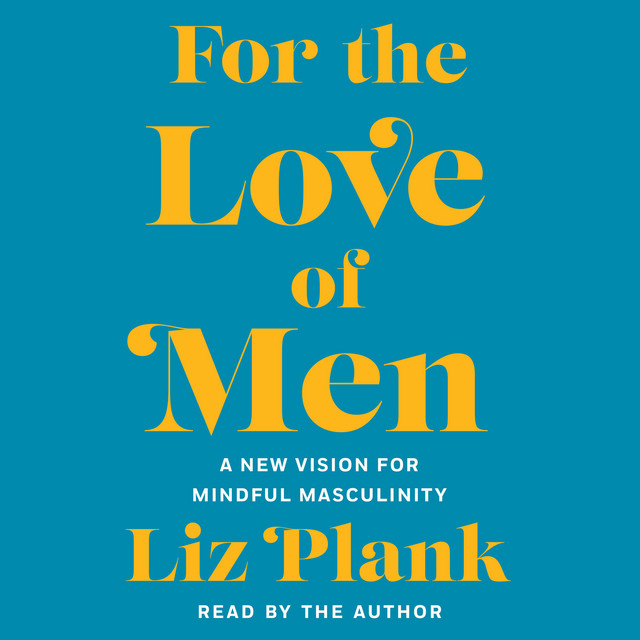
Not a podcast but highly recommend - Book by Liz Plank the unpacks why men and women are boxed up the way we are and how it is all connected and reinforces itself I truly don’t think progress will be possible without addressing the items that create our culture - if anyone else has read it, would love to have a book club chat about it anytime!
[
For the Love of Men: From Toxic to a More Mindful Masculinity
](https://open.spotify.com/show/2rKQ49vgbOFpyT2uFv5ZDA?si=aSa4JdJ6ScOt4ZAZaNcjcw)
I enjoy "Women and Money, and Everyone Smart Enough to Listen" from Suze Orman. And, "Jill On Money".
On YouTube, there is the Budgetnista, Erin Talks Money, and Jessica Moorhouse. The Afford Anything podcast is very interesting, although less personal and more financial.
Although I could think of those, when you asked the question, I did think to myself - why are so many of the personal finance podcasters men?
I suspect a big part of it is a numbers game - the majority of people in finance (in any capacity, not just personal finance) are men, AND the majority of podcasters are men (manosphere).
But in one of her episodes Katie also cited some statistics that show in the overwhelming majority of couples, even couples where the woman is the more financially literate or the primary breadwinner, the man is considered "in charge of finances". I think there's some deep cultural issues relating to gender and money in our society.
Wow that's so interesting! I would have never thought that.
For me, the person who is in charge of finances is the one who actually takes charge of the finances. Haha.
Just thinking about the podcasters etc, it's also a lot worse for women online than men. The level of abuse they receive is extreme, so I don't blame women for not putting themselves out there so much about such a personal topic.
Fun factoid. Research from a few years ago found that women are generally more successful at investing than men, seeing better returns by nearly 2%. The main reasons were that women tend to choose funds over individual stocks so benefit from diversification and they buy and hold more than men, staying put through volatility. Men tend to prefer stock picking over funds so aren't as diversified and they tweak their positions more than women during periods of volatility.
I imagine it's similar to how a lot of men think they could win a fist fight with a bear.
"Sure, the vast majority of stock pickers lose money, but I won't. I'm built different." 😂
😂
I really like Maggie Tucker. She did the podcast Friends On Fire, but her male partner decided to stop the podcast so then she created Inside Out Money where she rotates to a different co-host each week. Each episode has a different vibe depending on the co-host.
It could also be an inherent difference in how men and women are wired.
For instance, despite the majority of undergraduate college degrees going to women for decades now, the majority of degrees in the STEM fields (ranging from 60% to 80%) are still going to men. Sure, I'll bet there are some boys going into college being encouraged to pursue "hard sciences" rather than arts, and some girls going into college are being discouraged from going into STEM fields (whether directly or indirectly). However, after decades of extremely aggressive promotion of STEM fields towards girls in American schools, and decades of women receiving the majority of undergraduate degrees (a bit over 60% overall in recent years), the STEM fields are still heavily dominated by men (both in terms of enrollment and in terms of degrees conferred).
That all seems to suggest a lower interest level for STEM fields among girls going into college, as compared with boys going into college.
Granted, you are referring to finance, not STEM. But the same general principle holds. And, conversely, men seem to be less interested in health professions (with similar numbers as STEM, but with the genders flipped). That doesn't seem to be so much a cultural issue as it seems to be an anthropological issue.
I can't speak to STEM, but I can speak with direct experience about another heavily male field: skilled trade workers. There's a similar idea that it's down to biological differences, but I can say with 100% certainty that it's all cultural. Nowadays there's a huge industry push for ergonomics, PPE, and working safely. So the days when you need a lot of sheer strength and stamina to do these jobs are over; women are just as capable of doing the work as men.
The issue is the RIDICULOUS amount of sexism in these fields. It's not even the quiet, subtle kind of sexism. Women are straight up told they won't be hired, and even if they are hired they can't do the job, they should sit in the truck and sort parts while the men do the real work. They're never trained and never get real experience so they can't advance their careers. And THEN they catch flak for never doing the "real work" (there's a common frustration that the only time you see a woman on the job site is when she's carrying a clipboard).
And my experience is in San Francisco, one of the most progressive places in the world. I can't imagine how bad it is in other areas.
If complete interchangeability between the male and the female of the species is truly the superior way, it does make one wonder why humans (and essentially all vertebrates) evolved two genders with clear biological distinctions.
BTW, we (collectively, as a community/society/etc) kind of need to pick one argument and stick with that. It doesn't make sense to argue both that there are no differences and then at the same time also argue that women are actually better at some things (like investing, as noted by BostonFI ). Either there are inherent differences, or there aren't (and any observed differences are the result of some nefarious effort on the part of the elites, or whatever).
I don't think the arguments are mutually exclusive. Some things are biologically different, some things are purely cultural. We can disagree about which things are which and to what degree (and experts in the relevant fields also disagree, so it's far from a settled matter) but I think it's fair to say that the observed differences between the sexes are a combination of innate biological differences and differences imposed by culture and upbringing and experience.
Anyone arguing that there are no differences between male and female is clearly a fool and can be disregarded.
I'm going to have to disagree to an extent. The cultural differences, such as they are, have arisen predominantly as a result of biological differences.
Cultural differences arose, predominantly as a result of biological differences? Please provide facts rooted in historical precedent.
Because before they were murdering women for sale practicing medicine and calling them, witches, there was a lot more parity
Also, it was OK for men to hold hands and hug each other before we turned their fear of being called gay against them to prevent them from showing love for their male friends in the same way that women can show love for their female friends
I just heard an interview with the author of a book called platonic where she was Detailing Abraham Lincoln’s close relationship with his friend. People speculate gayness, but actually same-sex friendships used to allow a lot more gentleness than they do now and that’s culture, not biology.
Men are not less interested in health progressions but we influence them to avoid them
I think you’d really enjoy this book -
[
For the Love of Men: From Toxic to a More Mindful Masculinity
](https://open.spotify.com/show/2rKQ49vgbOFpyT2uFv5ZDA?si=aSa4JdJ6ScOt4ZAZaNcjcw)
We're getting a little off topic here, but I refuse to interact with anything that seriously uses the phrase "toxic masculinity". I know the original intent of the phrase is not to imply that masculinity itself is toxic, but the term has now been weaponized to imply that by gender warriors (primarily female and terminally online). The people who claim to be using the term more reasonably seem content to not try to reclaim it from these other people's sexist usage, so I refuse to interact with the term at all rather than spend my energy trying to parse "are you a Good Feminist or do you hate men?" Best case would be to just find a new, less gendered term for the concept altogether.
Same thing with "patriarchy" by the way. When "the patriarchy" as a concept can be used to explain how women will shame other women for not wearing makeup…there's just no good reason to associate this concept with a gendered term at all. It provides cover for sexists.
Sorry about the rant but I think it's important background for me to explain that I likely agree with most of the core concepts in the book but I cannot in good conscience have anything to do with it. Happy to discuss more but we're pretty far removed from personal finance now so we should probably do it over DM.
I replied without reading the whole thread, so I deleted my reply because it was not appropriate for the context of the entire discussion
I’m replacing it with this:
women and men. People. We all have to use our privilege to help each other.
you said something earlier than indicated that you actually have similar mindset regarding parity and gender, but are declining to engage with something simply because you don’t like a phrase they use. That will really limit humanity’s ability to evolve - and if you truly are seeking a better world for all people, I think you might want to try and work around the words that bother you to get into the content - because honestly, your voice is going to be more listened to at this point and it is important - crucial, actually
People are much more likely to listen to men than women in the fight for equal opportunity and access to emotional, mental, and economic health and growth. It’s important to be fully engaged if you actually care about helping women AND men.
we can’t control anyone but ourselves - and language evolves so rapidly these days, especially with algorithms and paid reach and bots, that we are all being “groomed” / influenced to form opinions - don’t let the algorithm influence you away from access to knowledge. Don’t let them control you.